
The Problem
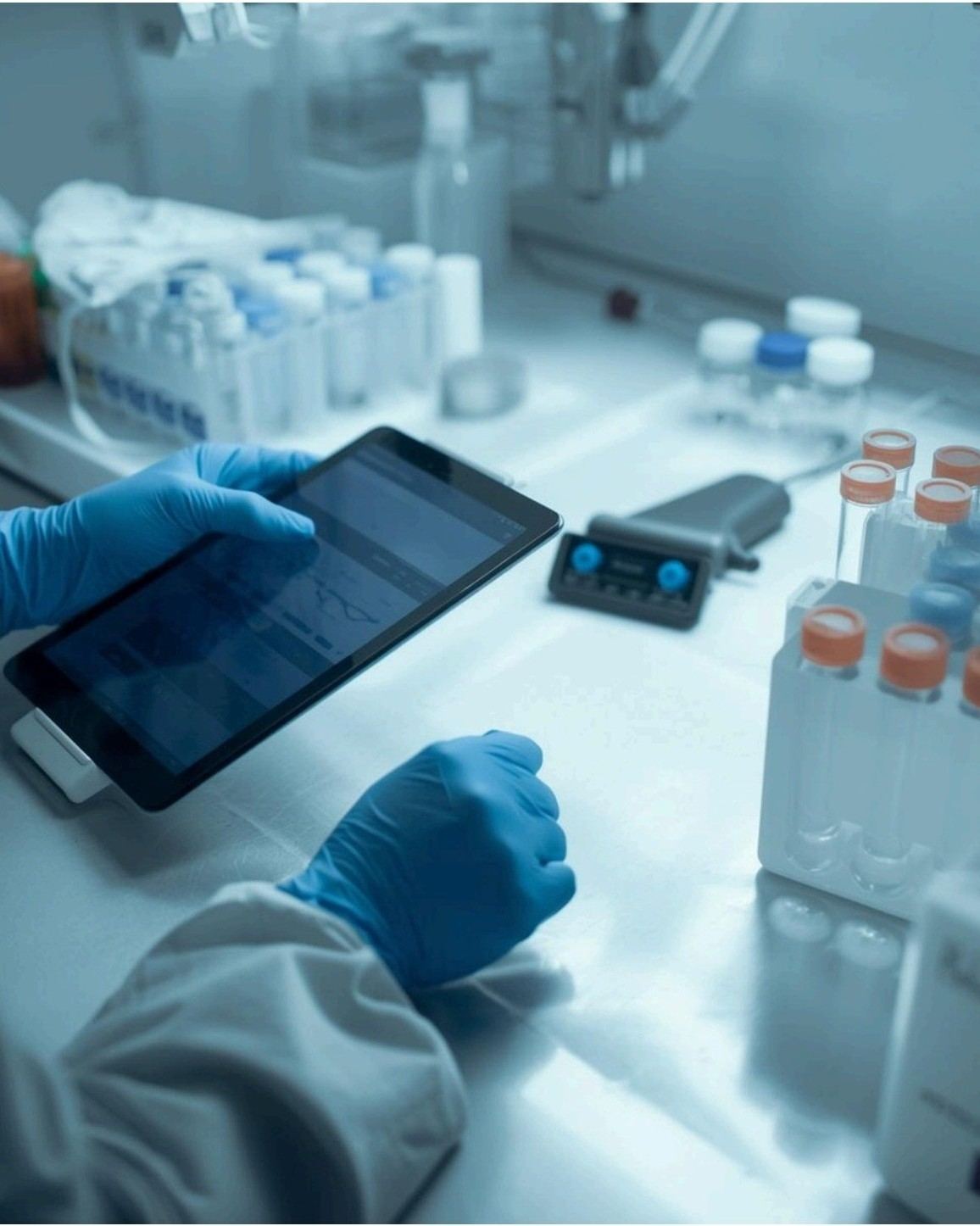
A high-throughput CAP/CLIA clinical genomics lab had a major gap in traceability across its workflow. Case creation and accessioning were digital, but all downstream lab processes were tracked on paper.
The problem was not documentation. It was execution. The system relied on people to record what happened after the fact rather than ensuring correct actions at the time of work. As volume increased, this created compounding risk across compliance, turnaround time, and scalability.
- No visibility into sample status once inside the lab
- No validation of reagent usage (expired, incorrect, or unvalidated lots)
- Incomplete audit trails for operator actions
- Delays surfaced only after the fact, without real-time intervention
- Off-the-shelf LIMS could not support workflow complexity
Data & Traceability Design Approach
Redesigned the workflow from manual documentation to real-time, system-enforced execution — connecting samples, reagents, operators, timestamps, and workflow status within a single traceability model.
"This effort was not simply a LIMS implementation. It was a shift from documentation to control."
- Implemented a custom LIMS spanning extraction through sequencing to unify the workflow
- Introduced barcode-based tracking for all samples and reagents with real-time capture
- Built point-of-use validation to prevent incorrect or invalid actions at the moment of execution
- Established operator-level tracking with complete digital audit trails
- Enabled real-time dashboards for workflow visibility and control
- Integrated samples, reagents, operators, and status into a single traceability model
Outcomes
- Established complete, real-time traceability across samples, reagents, and operators
- Prevented use of expired, incorrect, or unvalidated reagents
- Improved audit readiness through complete digital audit trails
- Late samples reduced from ~30% to 12%
- Severe delays of >3 weeks eliminated
- External audit time reduced from 5 days to 2.5 days
- Enabled ongoing workflow performance monitoring
Why This Worked
This was not a LIMS implementation. It was a shift from documentation to control.
The lab moved from recording what happened after execution to designing a system that captured and validated critical actions as work happened.
By connecting samples, reagents, operators, timestamps, and workflow status within a single traceability model, the system made execution visible, auditable, and controllable in real time.
This engagement is an example of Data Architecture & Traceability Design work.