Case Studies

Workflow architecture that ​changes outcomes

Case studies from genomics, diagnostics, and clinical lab teams that needed their workflows to hold up under real-world throughput, traceability, and integration demands.

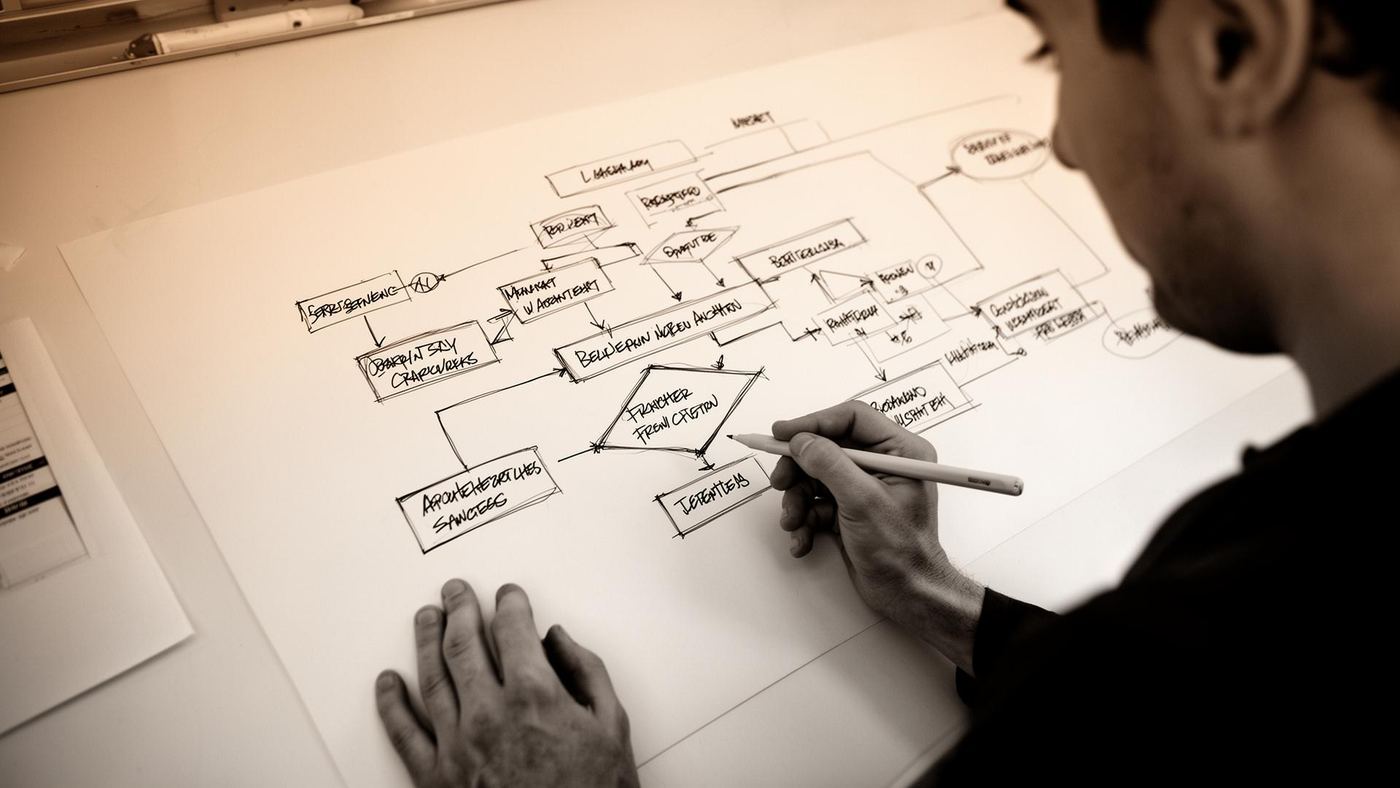
Hands sketching a workflow diagram with connected boxes and arrows, mapping a complex system on paper
Case 01

Clinical sequencing workflow scaled up 10x with no added headcount

When the workflow was never designed for throughput

A CAP/CLIA clinical lab needed to scale a half-automated Sanger sequencing workflow. Re-architected the system for scale without adding instruments or headcount.

Read full case study
Outcomes
  • Scaled throughput from 96 → 960/week.
  • Reduced CLS time from ~2 hours to 5 minutes
  • Maintained single-operator execution despite 10x capacity growth
Case 02

Workflow failure rate reduced from 20% → 0.4%

When the workflow starts failing under real-world conditions

An automated workflow was failing at a rate that threatened throughput and operator confidence. Re-architected the workflow for robustness and usability, eliminating the dominant failure modes.

Read full case study
Outcomes
  • Workflow failure rate reduced from 20% to 0.4%
  • Reduced manual pipetting by 64%
  • Sustained reliability at production volume
Case 03

Aligned a fractured team around a launch-ready MVP in 60 days

When the team is moving fast in different directions

A next-generation sequencing platform entered development during a period of organizational transition. Led end-to-end system architecture and workflow definition to align cross-functional teams and protect the Minimum Viable Product (MVP) timeline.

Read full case study
Outcomes
  • Resolved product-defining decisions across 30+ cross-functional stakeholders
  • Locked MVP scope to launch-critical requirements and secured executive phase-gate approval
  • Reduced scope churn, eliminated inherited complexity, and lowered downstream program risk
Case 04

Late samples cut from 30% → 12% through designed traceability

When data is unreliable and samples are hard to trace

A high-throughput CAP/CLIA clinical genomics lab tracked lab processes on a collection of paper and Excel files, creating fragmented visibility into sample status, reagent usage, and operator actions. Redesigned the workflow into system-enforced, real-time execution.

Read full case study
Outcomes
  • Reduced Late samples from ~30% to 12%
  • Eliminated extreme delays of >3 weeks
  • Reduced external audit time from 5 days to 2.5 days
Case 05

Clinical reporting risk eliminated in a 3,000 sample/day sequencing workflow

When no single component is broken, but the workflow still fails

A high-throughput SARS-CoV-2 sequencing workflow was producing recurring incorrect viral lineage assignments in a subset of each batch despite passing standard QC metrics. Issue at the complex intersection of systems found and mitigated before reaching scale.

Read full case study
Outcomes
  • Root cause identified across intersection of assay, automation, and software
  • Recurrence eliminated through targeted workflow controls
  • Restored confidence in clinical run reliability at scale
Case 06

NGS Sample-to-Answer Workflow Designed for Scalable Deployment

When teams define components without a shared end-to-end system

A next-generation sequencing platform had advanced in pieces, with no shared definition of how the full sample-to-answer workflow would behave as an integrated system. Led end-to-end architecture definition connecting lab, automation, software, and data layers from the user workflow outward.

Read full case study
Outcomes
  • Established shared architecture across lab, automation, software, and data layers
  • Defined 16 launch-critical features grounded in user workflow and operational requirements
  • Mapped data ownership, LIMS boundaries, and cross-system handoffs

Working on something similar?